Partial Knee Replacement
by Mr. Ramistetty
What is a patial knee replacement?
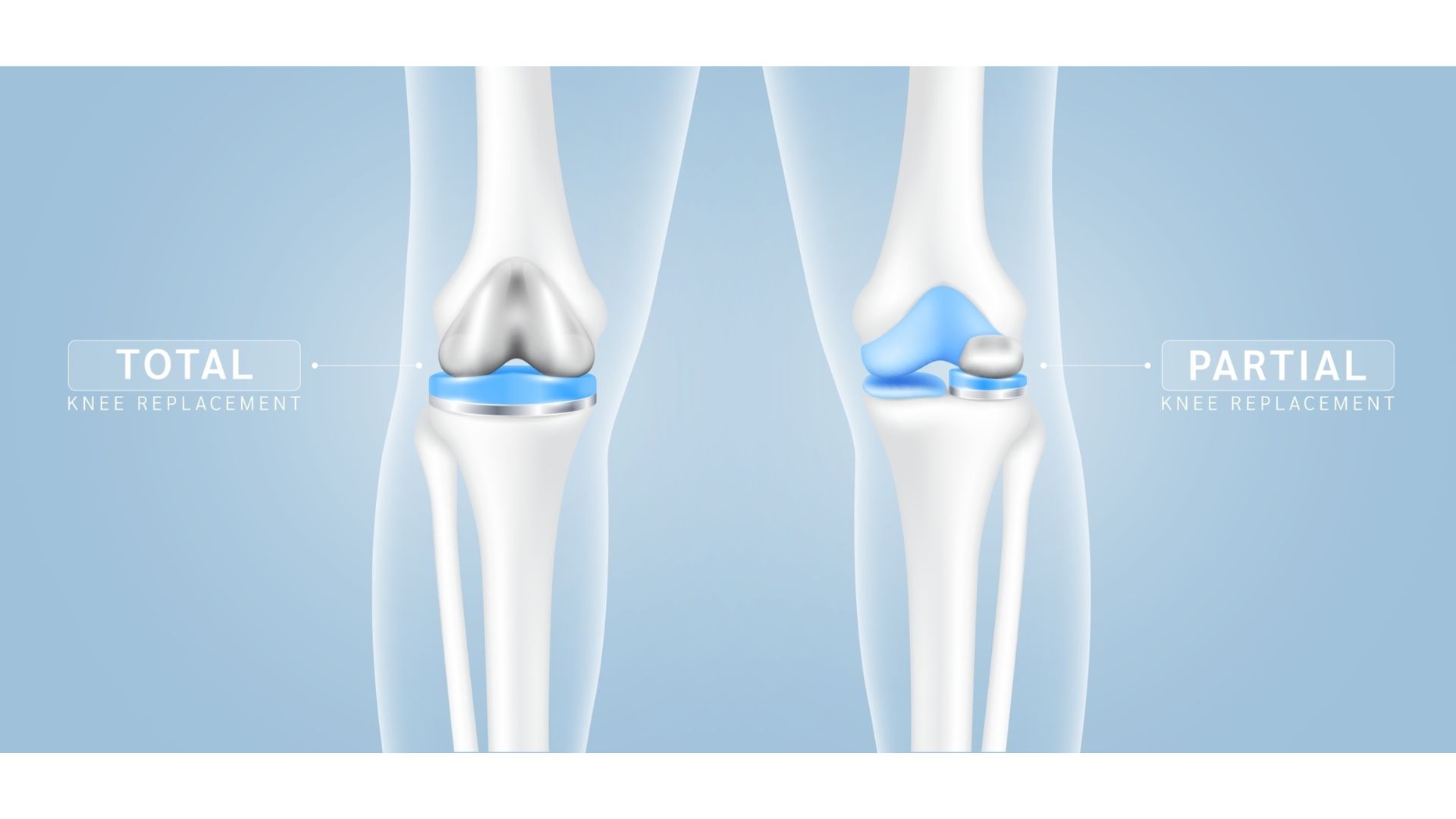
Partial knee replacement, also known as unicompartmental knee replacement (UKR), is a surgical procedure used to treat arthritis that affects only one part of the knee. Unlike a total knee replacement, which replaces the entire knee joint, a partial knee replacement targets only the specific area damaged by arthritis, preserving healthy knee tissues and providing quicker recovery.

Who is Suitable for Partial Knee Replacement?
You might benefit from partial knee replacement if you have:
- Arthritis or damage isolated to a single compartment of the knee (usually the inner or outer side).
- Persistent knee pain, swelling, and stiffness that limits everyday activities.
- Tried non-surgical treatments without sufficient relief.
- Good ligament stability and limited joint damage in other knee areas.
Partial knee replacement offers several key benefits compared to a total knee replacement. Because it targets only the damaged part of the knee, the procedure typically involves a smaller incision, leading to less post-operative pain and minimal scarring. Recovery is often quicker, with many patients returning to normal daily activities sooner. By preserving more of the natural knee structure and movement, it also tends to feel more like your own knee. In many cases, patients can go home the same day or within 24 hours, making it a less disruptive option with a faster overall return to mobility.
What Happens During and After the Procedure?
- Preparation:
Surgery typically takes about an hour and is performed under general or spinal anaesthesia. - Procedure:
Mr Ramisetty will carefully remove damaged cartilage and bone from only the affected knee compartment. A small, precision-fitted implant is then positioned to replicate your knee’s natural movement. - Closure:
The incision is closed with stitches or clips and dressed carefully to facilitate smooth healing.
Recovery usually involves:
- Short Hospital Stay: Often discharged within 24-48 hours after surgery.
- Immediate Physiotherapy: Early mobilisation and gentle exercises to restore movement.
- Pain Management: Medication and ice packs to manage discomfort and swelling.
- Returning to Activities: Most patients can walk unaided within weeks and resume normal activities sooner than after total knee replacement.
Full recovery, including improved strength and flexibility, typically occurs within a few months.
Long-Term Results and Expectations:
Partial knee replacements generally provide excellent pain relief and improved knee function, often lasting 10-15 years or longer. The surgery can significantly enhance quality of life, enabling you to return comfortably to daily activities, hobbies, and sports.